Preorder Management
Digital collection presentation, AI-assisted ordering, structured capture of every buyer decision — preorder management that generates intelligence, not just orders.
This is why platforms like FIRE — processing nearly $10 billion in annual transactions for Hugo Boss, Bugatti Shoes, Drykorn, LVMH and 100+ leading brands — exist. Not as order tools, but as wholesale intelligence platforms that capture, structure, and activate every data point.
Preorder: Where the Season Begins
Preorder determines 70–80% of a fashion brand's seasonal revenue, yet it's typically managed with the least sophisticated tools. Spreadsheets, PDF line sheets, email confirmations, and manual ERP entry — a workflow that hasn't fundamentally changed in decades despite transforming every other aspect of business operations. This disconnect between importance and sophistication represents an enormous optimisation opportunity.
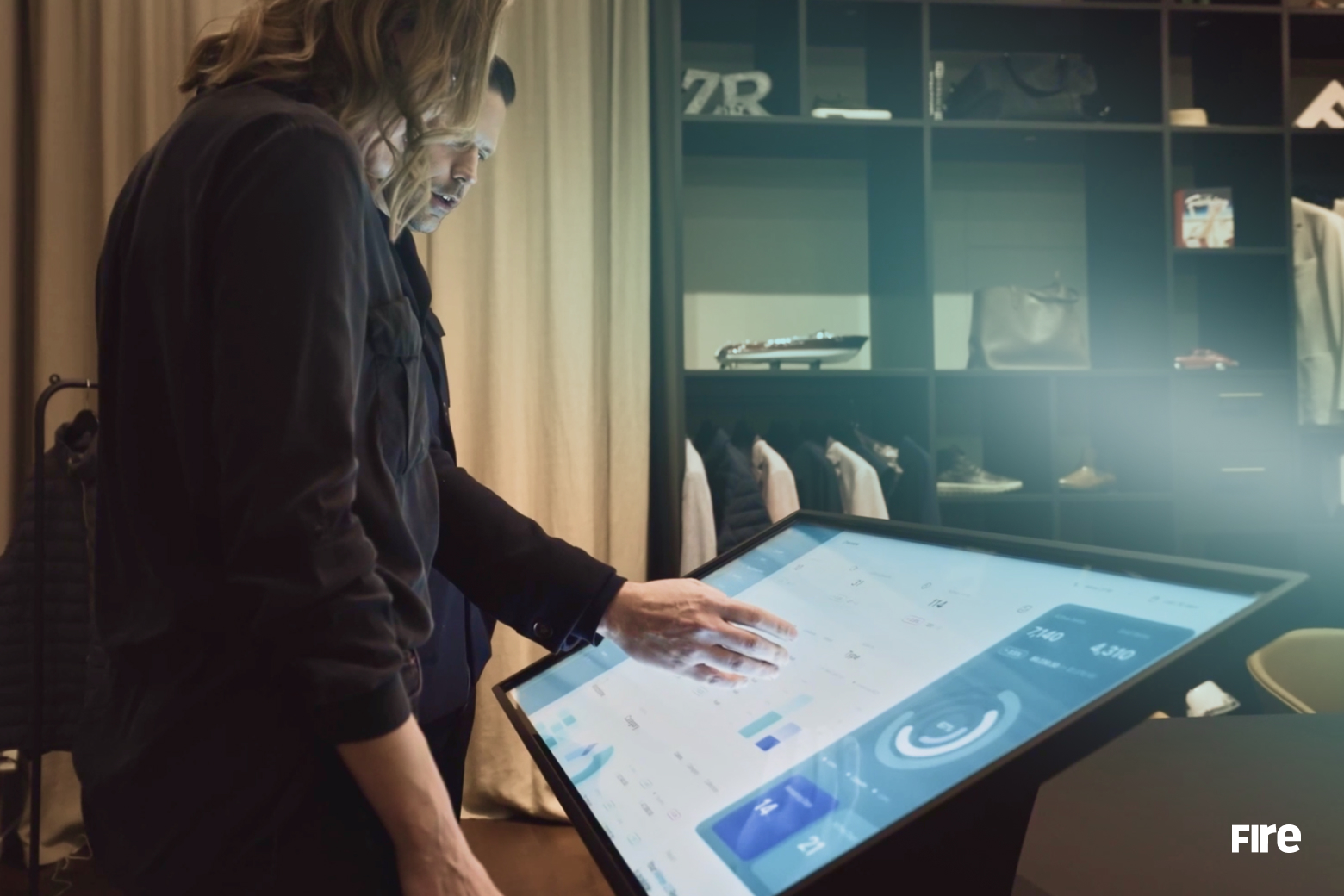
Digital preorder through FIRE transforms this critical process. Buyers access collections through the Digital Showroom, build orders with real-time availability and pricing, receive AI-powered recommendations based on their historical buying patterns and current sell-through data, and confirm commitments that flow directly to the ERP without manual re-entry. The result: faster appointments, larger orders, fewer errors, and structured data that feeds the intelligence layer.
AI-Powered Preorder Recommendations
FIRE's recommendation engine analyses each buyer's historical performance — what they bought, what they sold through, what they marked down, what they reordered — and generates personalised suggestions for the current season. 'Based on your sell-through patterns, we recommend increasing your allocation of transitional outerwear by 15% and reducing formal occasion wear by 10%.' These recommendations are grounded in data, not intuition.
The recommendation accuracy improves with every season. First-season recommendations are based on aggregate category patterns. By season three, they incorporate account-specific behaviour, regional demand signals, and competitive positioning data. By season five, they can predict with 80%+ accuracy which products each buyer will order, in what quantities, and at what price points — enabling proactive account management rather than reactive order-taking (projected estimate).
From Preorder to Revenue: Closing the Loop
The ultimate value of digital preorder isn't faster appointments — it's the data connection to downstream performance. When preorder commitments are captured digitally, they can be tracked through production, delivery, and sell-through to final sell-out. This end-to-end visibility reveals which preorder decisions generated the highest ROI, which buyer recommendations were most accurate, and which seasonal patterns should inform next season's strategy.
FIRE connects preorder data to reorder triggers automatically. When a preordered style sells through faster than expected, the system recommends reorder quantities based on remaining delivery windows and inventory availability. This preorder-to-reorder connection is the foundation of intelligent wholesale management — and it only works when both processes run through a unified platform.
The Competitive Reality of Preorder Management
Fashion wholesale is undergoing a structural transformation driven by data and AI. Brands that digitise their B2B operations gain advantages across every metric that matters: faster sell-in appointments, higher preorder conversion, more accurate demand forecasting, optimised reorder cycles, and deeper retailer partnerships. These advantages compound with every season of structured data capture.
The competitive dynamics are clear. Brands on unified platforms like FIRE capture 10–15x more data per wholesale interaction than brands using fragmented tools. This data advantage translates directly into better decisions: merchandisers see patterns invisible in spreadsheets, sales teams enter appointments with account-specific intelligence, and supply chain managers allocate inventory based on real-time demand signals rather than historical averages.
The gap between data-rich and data-poor brands widens every season. A brand with three seasons of unified data on FIRE has predictive capabilities that a brand starting today cannot match for 2–3 years. This time-based advantage is permanent and irreversible — the only way to minimise the gap is to start as early as possible.
Implementation and Results
FIRE's 10-week implementation timeline means brands can transition from fragmented tools to a unified B2B platform within a single quarter. The deployment covers: Digital Showroom configuration, product catalogue migration, ERP connectivity (SAP, Dynamics, Infor, Sage), user training, and go-live support. Most brands begin their first digital sell-in season within 12 weeks of signing.
The results are measurable from the first season. Brands processing nearly $10 billion in annual wholesale transactions through FIRE report: 25–35% improvement in appointment efficiency, 15–25% increase in preorder value through AI recommendations, 30–40% reduction in sample costs through digital presentation, and complete elimination of manual order re-entry errors. These operational improvements generate immediate ROI while simultaneously building the data foundation for advanced AI capabilities (projected estimate).
By season three, the compounding effect becomes visible: predictive models outperform manual planning, reorder automation captures revenue that manual processes miss, and account strategies are informed by multi-season behavioural data rather than relationship memory. Brands that start this journey today will have these capabilities by 2028 — brands that delay will not.